Salon • Boulevard
Building a Salon Equipment List: Tips for New and Growing Salons
Building a Salon Equipment List: Tips for New and Growing Salons
Key Takeaways
The ideal salon equipment must factor in functionality, client comfort, and your brand aesthetic.
Here's a full run-down of everything you need to get started.
Every salon owner has a wish list of salon equipment and furniture for building out their perfect beauty salon. That dream salon supplies list might include a wall of Dyson hair dryers and a built-in espresso bar, but buying salon equipment means translating your mood board into practical choices that serve the space as much as the team and the client experience.
This guide covers the essential equipment new and growing salons need, from styling stations and sanitation to technology for the front desk. We’ll also cover how to prioritize your hair salon supplies list, what average budgets look like, and use Boulevard to keep your salon running optimally once everything’s set up.
What Equipment Does a Salon Need?
Branding plays a big role in your salon’s reputation and client retention, but aesthetics shouldn’t outweigh practicality. Most salons will need styling tools, shampoo and processing equipment, and technology to support the customer process, like a POS system, on top of furniture and goodies for the reception and waiting areas. No matter what your list looks like, every piece of salon equipment needs to support your business plan.
For instance, a high-end barber chair might photograph well for your social media marketing strategy. But if it’s too big for the barber station, it can make it difficult for your team to move around and work efficiently, ultimately hurting the client experience.
As you build out your salon equipment list, think through each purchase in two ways. First, decide what’s absolutely necessary to have before opening and what can be added later. Then, consider how each item supports client comfort, service quality, and an efficient daily flow. That’ll make it easier to separate essentials from nice-to-haves and help you prioritize what to invest in first.
Ultimate Salon Equipment Checklist in 6 Categories
Salon owners have a lot to buy before opening day, and the list can get messy without structure. Separating your equipment, supply, and furniture needs makes it easier to spot what’s missing before it becomes an expensive last-minute purchase.
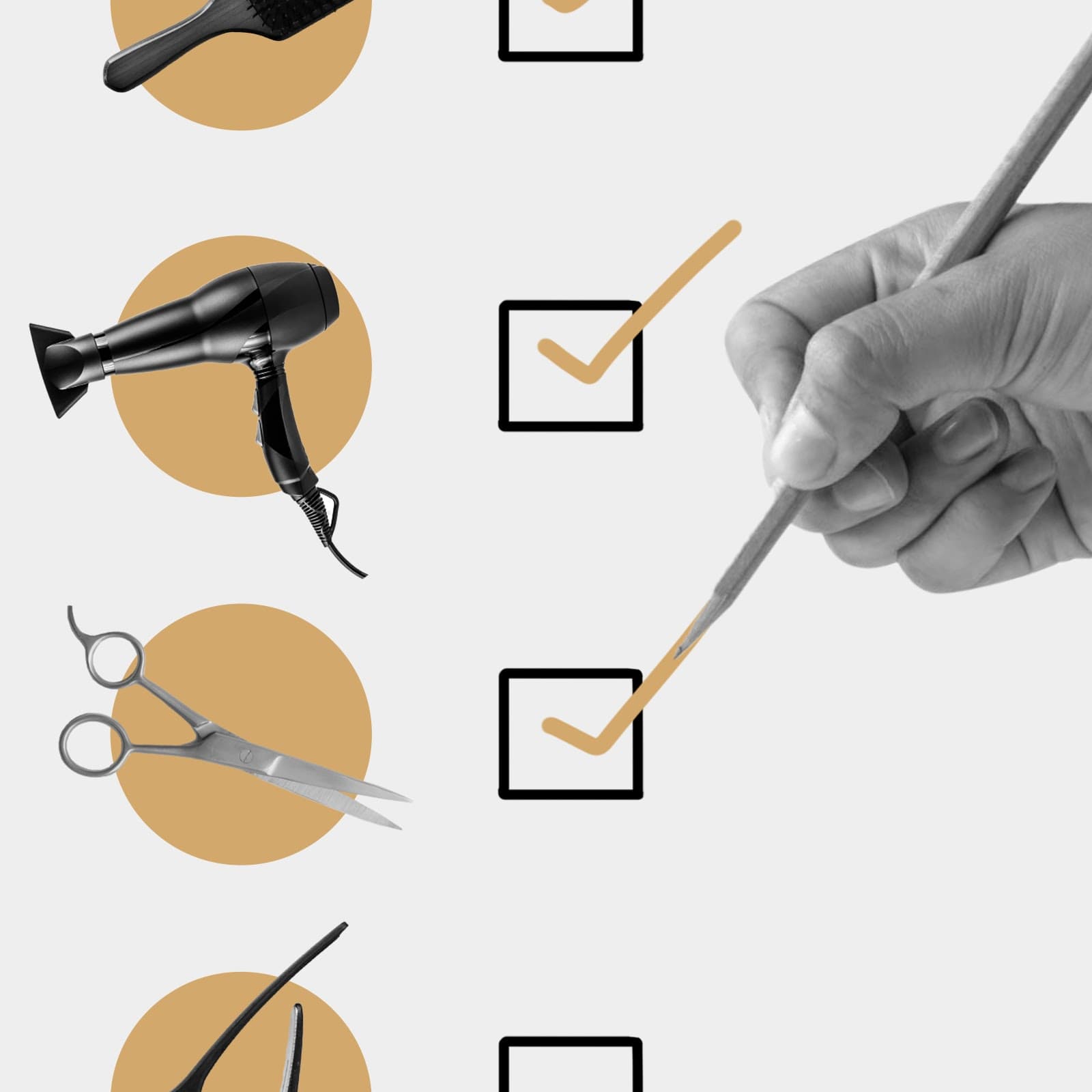
Use this salon equipment checklist to plan each part of your salon more clearly. In it, we’ll cover the six types of core equipment new salons need, with tips on how to choose items that support daily management and future salon growth.
1. Styling Stations and Salon Chairs
Styling stations and barber chairs are the first pieces people imagine when they picture a finished salon. They’re visually important, but that makes it easy to overvalue their design. Chairs that look beautiful but adjust awkwardly or wear down quickly will create problems for clients and stylists through their impracticality.
Pay close attention to the chair’s comfort, practicality, and durability when researching your salon chair options. It should be easy to raise and turn during the service, and comfortable enough for long bleaching sessions and other treatments where the client might be sitting for a while. Hydraulic styling chairs often fit the bill.
When you’re planning workstations, picture all the things a stylist will need within arm’s reach during a typical appointment. Each table should keep tools readily accessible using built-in storage or cabinets and drawers that fit neatly underneath. Mirrors should give clients and stylists a clear view of what’s happening throughout the service without glare.
2. Shampoo Area
As part of your salon’s workflow, your shampoo station also needs to balance form with function. A sleek stainless steel backwash unit and shampoo bowl might look amazing, but if it’s not easy to clean or uncomfortable for clients to rest their heads on, it’s unlikely to make the positive impact you’re hoping for.
Start by examining your service menu. Salons built around coloring, blowouts, and natural hair treatments use the shampoo area constantly. That volume may require more than one backwash unit, plus additional nearby storage to keep towels and shampoo within reach. A beauty salon or barbershop focused on dry cuts or quick trims may only need one well-organized station and cart for clients who book a professional shampoo treatment.
Build the shampoo area with comfort and access in mind. An adjustable neck rest helps clients lean back comfortably. Nearby shelving, a slim cabinet, and a rolling cart keep towels and products close without crowding the bowl.
3. Styling Tools and Color Supplies
It might be tempting to grab every niche tool and gadget you know you’ll want to use eventually, but start with what your team uses every day. Don’t be afraid to spend more on salon tools and equipment for high-volume services, and be more selective with specialty tools that get little use, to maximize your ROI and limit how much you have to spend replacing those tools later.
For instance, a barbershop needs a strong supply of clippers and trimmers that stay sharp through a packed day. However, the team can probably spend less on basic combs that are durable and easy to replace.
A hair salon has different tradeoffs. A stylist who only uses clippers for the occasional cleanup doesn’t need high-end barber equipment, but they will need several types of shears to create different cuts and textures.
The same logic goes for color supplies. If color drives appointment bookings, invest in reliable mixing tools, scales, and brushes. But if color is a smaller part of the business, start with simple (but professional) versions of the essentials and expand as demand changes.
4. Reception and Waiting Area
The reception and waiting areas are where you can have the most fun with your salon decorations. There are fewer technical constraints than on the service floor, which leaves more room for the salon’s personality to shine. The goal is a space that feels comfortable and memorable without looking cluttered or creating access issues for clients with limited mobility.
Salon furniture sizing does most of the work here. A reception desk and seating that are too large can make the waiting room feel cramped. Retail displays need the same restraint: A small shelf with space between products feels more curated and less overwhelming (and consequently easier to browse) than a wall packed with inventory, which does the double-time of inviting clients to make retail purchases, too.
5. Technology and POS
Scaling your tech stack shouldn’t follow the same logic as scaling the rest of your salon equipment. You can add a pedicure chair or trolley when the space and demand are there, but adding disconnected software makes it hard to patch together workflows as the business grows.
Choose a platform with all-in-one capabilities early, especially if you plan to grow to multiple locations. Boulevard brings all the essentials for a high-end, scaling salon—including scheduling, POS, and custom reporting—into a single system. That way, your salon doesn’t have to connect multiple apps and risk information falling through the cracks as the business becomes more complex.
6. Cleaning and Sanitation Supplies
Cleaning and sanitation supplies take up more room than many salon owners anticipate. Without dedicated storage, supplies spread all over the salon and create clutter that slows down appointment flows.
A well-organized shelving unit or closed cabinet keeps supplies organized without taking over the salon’s aesthetic. Place it near the service area, shampoo station, or laundry zone, depending on where the team resets most often. Approved disinfectants and sterilizers should also be easy to reach, with visible sanitation protocols posted to ensure compliance with local laws.
How to Budget for Your Salon Equipment
New salons typically spend between $90,000 and $150,000 getting ready to open. That $60,000 difference comes with scale: Salons with a simple service menu and small team can get away with fewer stations and a scaled-down footprint. The higher end of the range usually comes from more complex opening plans, like a larger service floor, buildouts, and highly specialized equipment.
Regardless of where you sit on the scale, a hair salon supplies list makes your budget easier to control because it helps you understand exactly what you need before opening day. Put the largest share of the initial budget toward the items your team will use every day. Styling chairs should take priority over decorative lighting, for instance, and blow dryers matter more than wall art.
Once your checklist of essentials is complete, the next question is how you’ll pay for these necessities. There are three options: purchasing, leasing, and financing.
Buying equipment outright gives the salon full ownership over their supplies from the beginning, but requires more capital upfront. Leasing lowers the initial expense and leaves room to upgrade later, and can also make sense for equipment you want to test before committing to a full purchase. The tradeoff is that leasing usually costs more over time. Financing spreads the investment across payments while still moving the salon toward ownership, which helps preserve cash flow during the opening phase, but you’ll still pay more overall than purchasing outright.
How Boulevard Keeps Your Salon Running After Setup
A thoughtful salon setup needs thoughtful technology to match. Once the stations are furnished and waiting rooms decorated, Boulevard gives salons the operational system to keep the business organized from the get-go.
Boulevard’s Precision Scheduling™ and booking tools make it easier to fill the calendar and keep schedules organized. Instead of relying on calls and text messages at the front desk, clients can schedule appointments for themselves online when they’re ready to book. Precision Scheduling™ adds buffer time between appointments for setup and cleaning between clients and optimizes who’s booked when to make the most of your floor time without bringing burnout into the picture.
Boulevard also brings scheduling, payments, and client profiles into the platform, with reporting features to continuously improve the business. Learn more about Boulevard’s Salon Software today.
FAQ
What Equipment Do You Need to Start a Salon?
Most beauty salons and barbershops need equipment for six core areas: Furniture for styling stations, shampoo stations, and the reception area, plus equipment for styling and sanitation. You’ll also need some hardware, like a receipt printer or check-in kiosk, and other tech, like a POS system, to get started. Your exact list of needs depends on your service menu, but every purchase should support client comfort and service quality above all else.
Should I Buy or Lease Salon Equipment?
Both financing options have pros and cons. Buying salon equipment outright gives the business full ownership, but it requires more capital up front. Leasing preserves cash flow during opening and offers more upgrading flexibility, but it costs more over time.
What Salon Software Do I Need Alongside My Equipment?
Salons need software that keeps all of the business’ workflows organized from launch. Boulevard is designed specifically for the beauty and wellness industry, handling booking, POS, and client management from a single platform.


Cynthia Popper
Pronouns she/her/hers
Cynthia is Director of Content Strategy at Boulevard and has held content and creative roles in the beauty industry for over a decade.
Reach out at cpopper@blvd.co
Related Posts

Beauty Salon Equipment: Rent, Buy, or Finance?
When shopping for beauty salon equipment, how you shop matters just as much as the quality of the equipment itself. Here's what you need to know.
Read Article
Lash Tech Equipment: The Essential Checklist Your Business Needs
Need the 411 on lash tech equipment? Here’s a complete list of everything you need to start your lash biz.
Read Article
What to Look For in the Best POS System for Hair Salons
Boulevard breaks down what the best POS system for a hair salon has to cover, from payments and checkout to scheduling and client management.
Read Article
How to Find the Right Medspa Equipment for Your New Business
Learn about the medspa equipment you need to get your business started. Knowing how to start your acquisition list makes the whole process easier.
Read ArticleBeauty Salon Insurance For Your Business
Wondering if you need beauty salon insurance for your business? Learn what it covers, how much it costs, and how to protect your growing salon.
Read Article
Salon Financing: How to Raise Capital for Your Beauty Business
Salon financing takes time, effort, and hustle. But with the right strategy, you can acquire capital to lift your beauty business to the next level.
Read Article
Best POS System for Barbershops: 5 Top Picks for 2026
Boulevard breaks down the best POS systems for barbershops, covering checkout, tip, hardware, and payment practices for walk-in and multi-chair shops.
Read Article
CYA: How to Stop Worrying by Learning to Love Liability Insurance
Liability insurance is an important part of any hair and beauty salon business. Learn about the different types of insurance, how much it costs, and more.
Read Article
Why Offering Financing to Customers Closes More Appointments
Boulevard explains how financing can support your salon or medspa and walks through offering financing to customers to close high-ticket services.
Read ArticleSign up for weekly blog updates.